
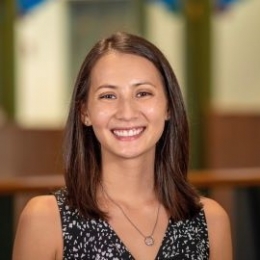
Lauren Balotin 19C
While at Emory, Lauren was a delegate to COP23 and COP24, and she conducted research with Dr. Saikawa to assess the knowledge of heavy metal soil contamination among Atlanta's urban gardeners. She has previously interned with the CDC, NASA, and Root Solutions, a nonprofit organization that uses behavioral science strategies to inform environmental policies and initiatives.
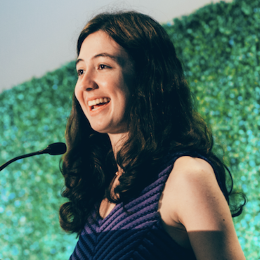
Zola Berger-Schmitz 19C
My freshmen year, I took a climate policy seminar in the ENVS department, where I learned about the history of the UN Climate negotiations and the historic nature of the Paris climate treaty. Though I had been involved in environmental activism throughout my middle and high school years in California, I knew very little about the trajectory of international climate politics. I was excited by the intricacies of climate coalition-building, and the complexities inherent in balancing global climate governance with national level flexibility. In the spring, I met Dr. Saikawa at an event called the Georgia Power Dialogue and she told me about Emory's inaugural delegation to COP 21 in Paris. I also spoke to several students who had been to COP 21 in Paris and were involved in founding the Emory Climate Organization. I was really inspired by their experiences. When an opportunity came up to attend the 2016 UN Climate Talks in Bonn, Germany, I immediately applied to attend.
My second time attending the UN was my junior year at Emory. At that point, I had already served as co-president of the Emory Climate Organization (ECO) for several years and had worked with Dr. Saikawa and other student leaders to build momentum for climate advocacy on the Emory campus.
Before attending the UN Climate Talks, I had watched videos of prior conference proceedings and I had some idea of how the official UN Climate negotiations were structured. However, nothing could have prepared me for the chaos that ensues at conferences as thousands of delegates attempt to reach some level of consensus, or the thrill of being at the center of a climate incubator with so many dynamic leaders.
My first time at the UN Climate talks, I attended meetings for YOUNGO (the youth constituency group for the UN). I was offered the opportunity to join a youth climate dialogue with Christiana Figueres, who was the executive secretary of the UNFCCC at the time. Alongside a group of other youth activists, I had the chance to offer recommendations to Ms. Figueres on strengthening youth representation at UN climate negotiations. It was exhilarating to work with so many other youth climate leaders, and I never anticipated that I would have the ability to use my voice to advocate for change on an international scale.
My biggest take-away from the COP conferences is that possessing scientific or policy expertise in the climate change arena is not enough in order to craft an equitable and just global climate agenda. The UN climate negotiations cannot be inclusive unless climate decision-makers consult with delegates from an array of different backgrounds, many of whom view climate change as a life or death issue that will dictate their country's future survival. In this sense, listening to other voices is incredibly imperative in ensuring that environmental justice is integrated throughout the negotiation process.
